
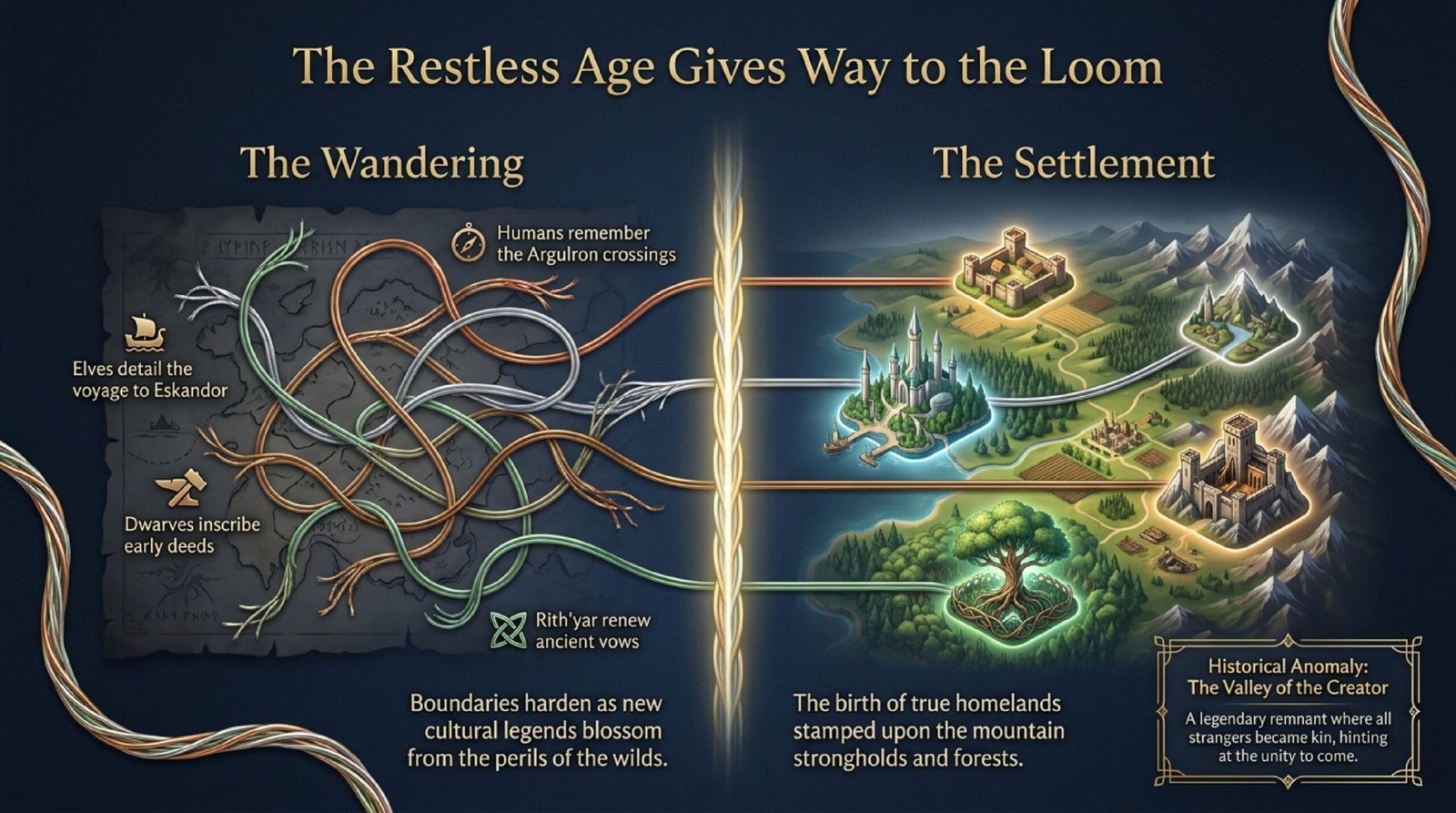
As boundaries hardened, so too did a stronger sense of racial identity. New legends blossomed, full of the perils and glories of each people’s wanderings. Humans in Norstok remembered the Argulron crossings in mythic song. Elven epic cycles detailed the voyage to Eskandor. Dwarves inscribed deeds in ceremonial halls, and the Rith’yar renewed ancient vows and plantings.
Festivals such as the Hammerfrost Gathering and the Emberwine Fair drew traders and diplomats from all races. Even the Rith’yar, in their quiet way, blended ritual with borrowed elements from the wider world.
Not every expedition ended in glory. Oral traditions recall lost villages, collapsed tunnels, and caravans returning with fewer souls. Yet for every loss came innovation—new ways of building, healing, and surviving.
By the closing centuries of the Age of Exploration, Norstok, Eskandor, Haalmdor, and the Jungaran Peninsula had become true homelands. The faces and fates of the races were now stamped upon hills, forests, and mountain strongholds.
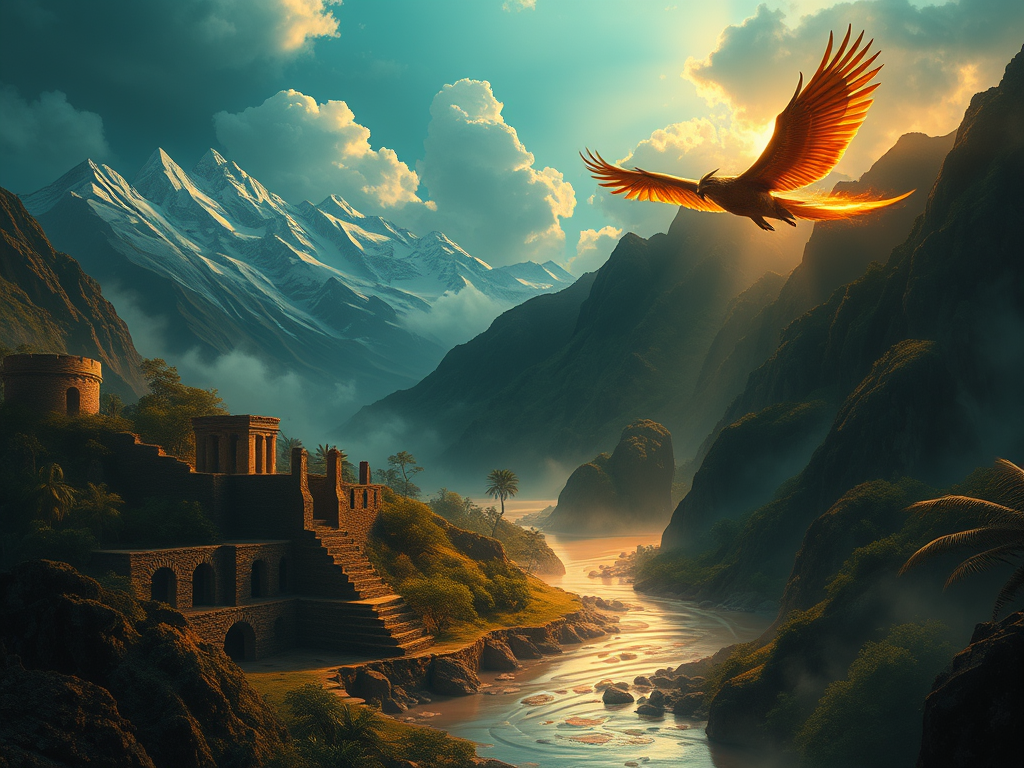
Still, travelers spoke of the Valley of the Creator, where once all strangers became kin. The Age of Exploration left behind not only roads and nations, but the first hints that unity and division, adventure and belonging, were ever-twined threads in the tapestry of Einarth.
The restless age of wandering slowly gave way to settlements and the patient work of building lasting civilizations.
Leave a Reply