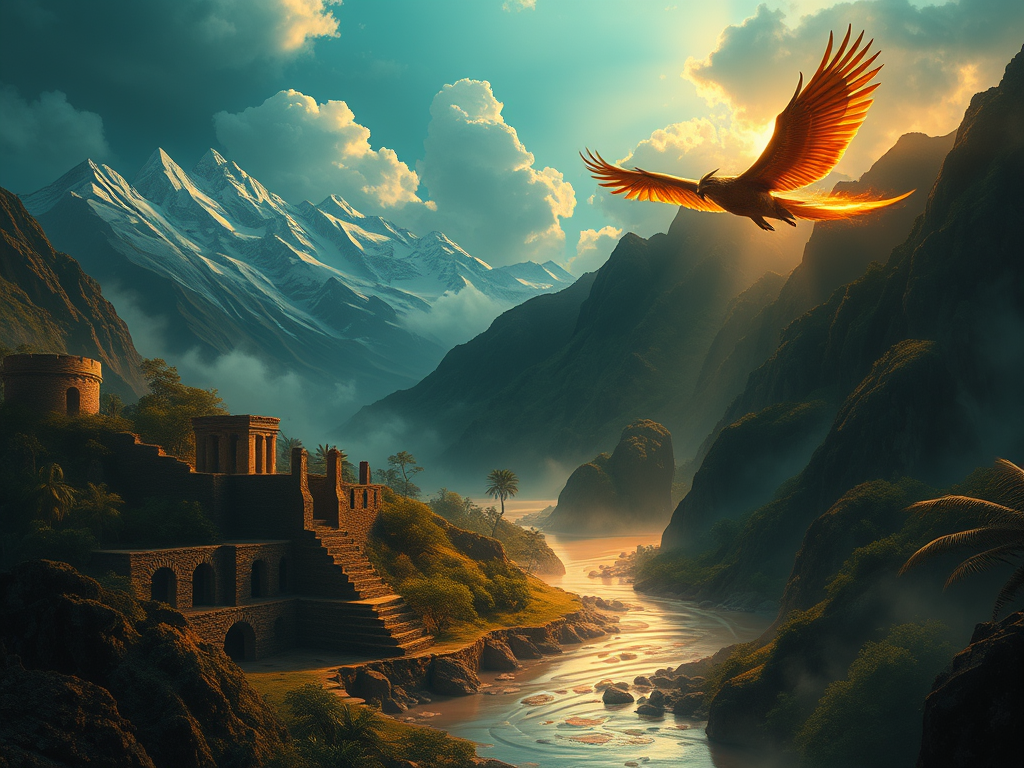

The twelfth and final child of Bhava was Yaroth, one of the most complex and feared figures in the divine lineage. He was born in the tranquil glades of Eskandor to Katira, an Elven woman of common birth who preferred wild violets and woodland paths to the grand halls of Lyrevene. The oldest stories remember her as a gentle woodland Elf whose warmth drew Bhava during his final sojourn among mortals.
A Birth Beneath the Twin Moons
Katira welcomed Bhava without pretense, never fully grasping the vastness of his nature yet sensing the gravity of his presence. Their time together was brief, filled with laughter in the morning mist and quiet confidences over dusk-lit fires. In time, she bore him a son beneath the watchful light of the twin moons, Leyah and Setti.
Yaroth was unlike his siblings from the beginning. Where some brought calm, growth, healing, or insight, Yaroth carried an unsettling grasp of arcane forces almost as soon as he could walk. Elders whispered that storms broke harder near him and that wild creatures fell silent in his presence.
The Child of Unsettling Power
Yaroth’s childhood is remembered through one defining tragedy. At the age of six, he was bullied by a pair of human children who tormented him with a snake. In panic, his divine power lashed outward and fused the children and serpent together, creating the Naga race. This was not an act of careful design, but a child’s terror transformed by divine force into permanent change.
That moment revealed the heart of Yaroth’s domain. He was a maker, but not in the gentle sense of planting or artistry. His power remade bodies, destinies, and boundaries. Creation and destruction were never separate in him; they were two faces of the same terrifying gift, which we’ll talk more about when we cover the Age of Chaos.
The Ever Changing Serpent
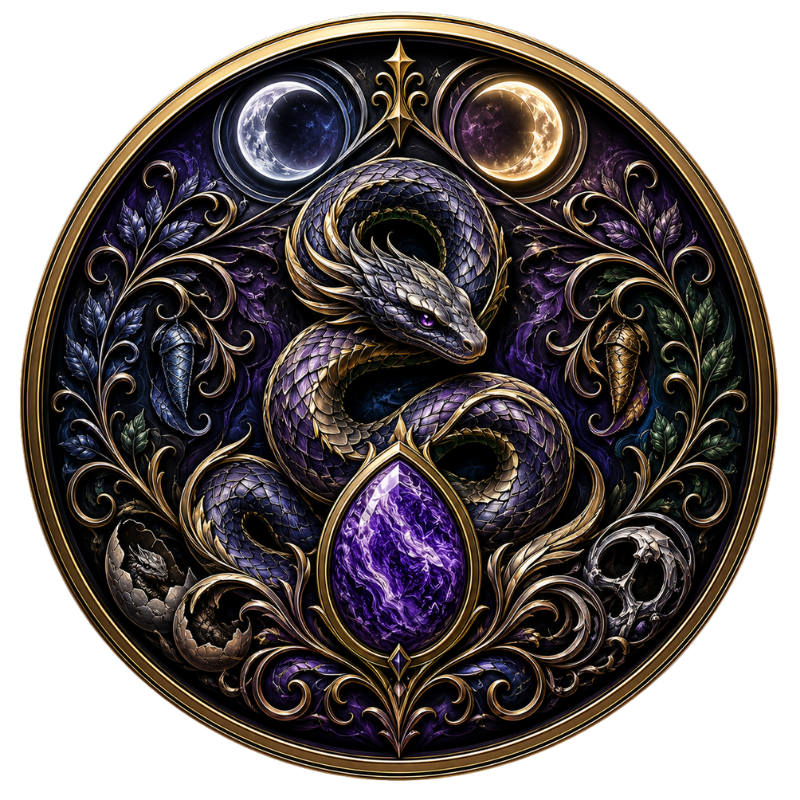
Yaroth’s most enduring symbol is the Serpent, drawn from the creation of the Naga and from his association with danger, cunning, and transformation. In later devotional traditions, Charoite, which is widely associated with transformation and spiritual insight, became his sacred stone.
Followers who invoke Yaroth do not do so lightly. The serpent reminds them that change can heal or poison, free or deform, renew or consume.
Yaroth’s story serves as a warning. Transformation born from pain may create something new, but it may also carry the wound forward in another shape.
The Legacy of the Last Child
In the current Age of Heroes, Yaroth is remembered with fear, fascination, and caution. The Naga, Avians, and Murians all carry echoes of his power to alter life’s boundaries. Scholars debate whether he should be understood as a destroyer, a creator, or both. His legacy endures wherever grief becomes action, wherever the old form breaks, and wherever mortals ask whether renewal can ever be separated from loss.
Thus ends our journey through the Age of the Divines: from the birth of Omerus, who awakened magic, to Yaroth, who revealed the terrible power of transformation. Together, their stories remind us that divine blood did not enter Einarth as a single blessing or curse, but as a living spectrum of power, choice, inheritance, and consequence.
Next week we’ll begin to unravel the events of the Age of Magic and the effects of magic on the world.
Leave a Reply