

When Bhava withdrew his children from Einarth, he did not take everything they had touched with them.
The world had already changed too much for that.
Divine power had passed through stone, water, blood, song, craft, and places that mortals had only begun to understand. Some of those traces faded with time, others did not. The oldest accounts disagree on how much the people of Einarth understood in those first years, but they agree on one thing: the departure of the Divines did not mean the end of magic.
Mortals were left without guidance to make sense of it on their own.
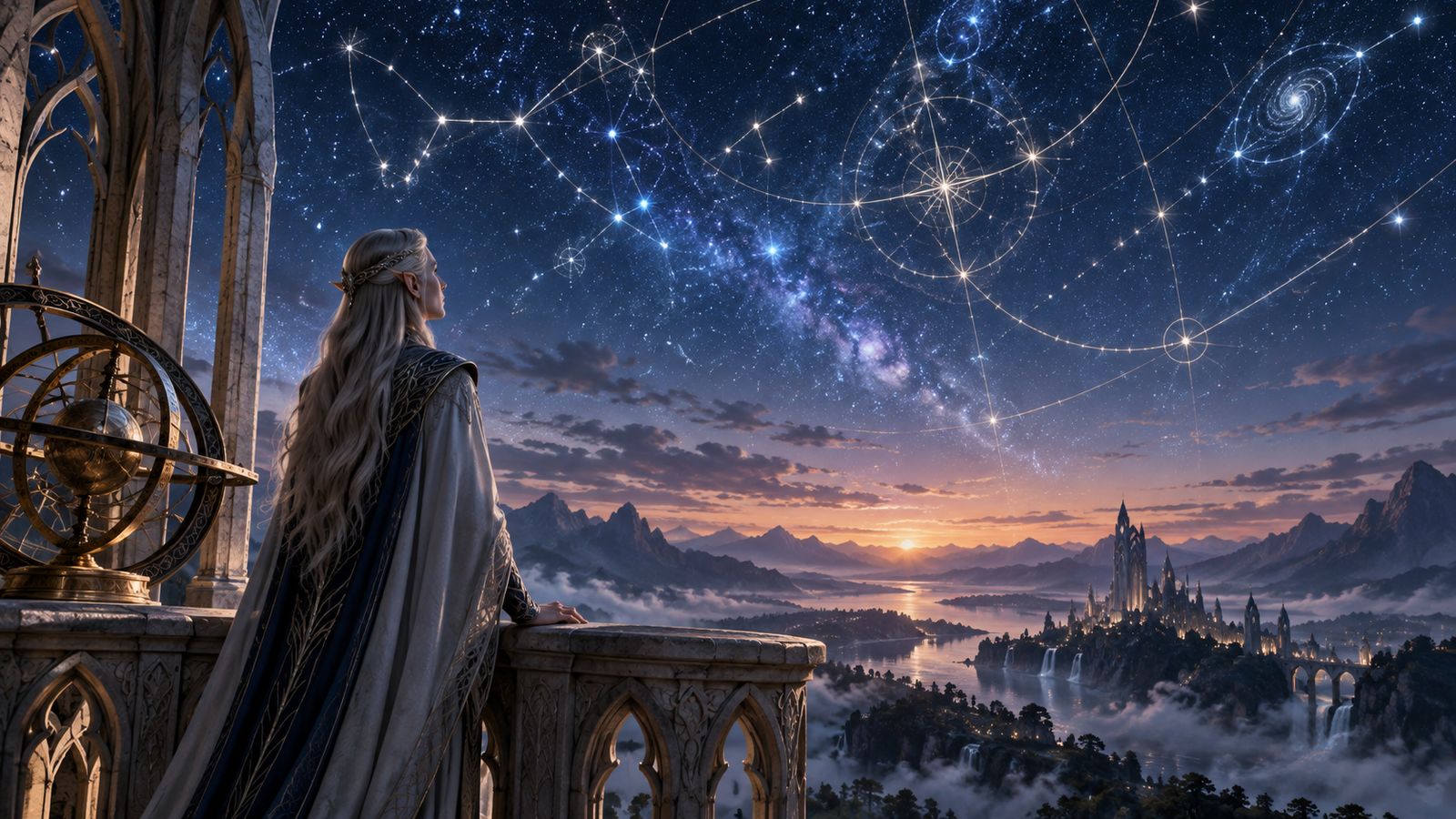
The Elves first noticed patterns in the heavens. Though, at first, they did not understand, they watched the stars and the wind; they recorded, compared, and waited. Their long lives gave them time to notice changes that might have escaped the shorter-lived races.
The Dwarves were naturally more attuned to the stone of the mountains. They learned that stone answered certain marks. Metals held power in ways that wood did not. A rune carved carelessly could fail, yet when cut with the right material and precision it might hold for years.
Humans approached the problem as Humans often do; with trial and error. They began turning scattered knowledge into grimoires, experiments, and early schools of thought.
The Rith’yar paid closer attention to the land itself. They studied plants, seasons, animals, and remedies. In the first years of the Age of Magic, that knowledge mattered as much as any spell.
The Naga faced a different problem.
Their existence was already tied to divine power in a way no other race could ignore. They had been changed by Yaroth’s fear, and the generations that followed had to learn how to live with bodies and abilities the rest of Einarth regarded with suspicion.
No one had a complete answer. A prayer worked once and failed the next time. A rune carved into one stone held, while the same mark split another. A melody calmed a frightened child, then left the singer weak enough to sleep for a day. A field recovered after a ritual no one could fully explain.
The people of Einarth learned through fragments. Some of those fragments became traditions. Some became warnings. Others disappeared because the person who discovered them did not survive long enough to teach anyone else. That uncertainty defined the beginning of the Age of Magic more than any great school or famous mage.
The gods had left the world.
Magic had remained.plete answer. The people of Einarth learned through fragments. Some of those fragments became traditions. Some became warnings. Others disappeared because the person who discovered them did not survive long enough to teach anyone else. That uncertainty defined the beginning of the Age of Magic more than any great school or famous mage.
The gods had left the world.
Magic had remained.
Next week, we will look at what happened before anyone truly understood the rules, and at one of the first places to pay the price.
Leave a Reply