
The first generations of the Age of Magic were learning by trial, memory, accident, and necessity. There were no established schools to explain why one working succeeded while another failed. Mortals had seen the Divines use power as naturally as breathing. They soon discovered that knowing magic existed was not the same as knowing how to control it.
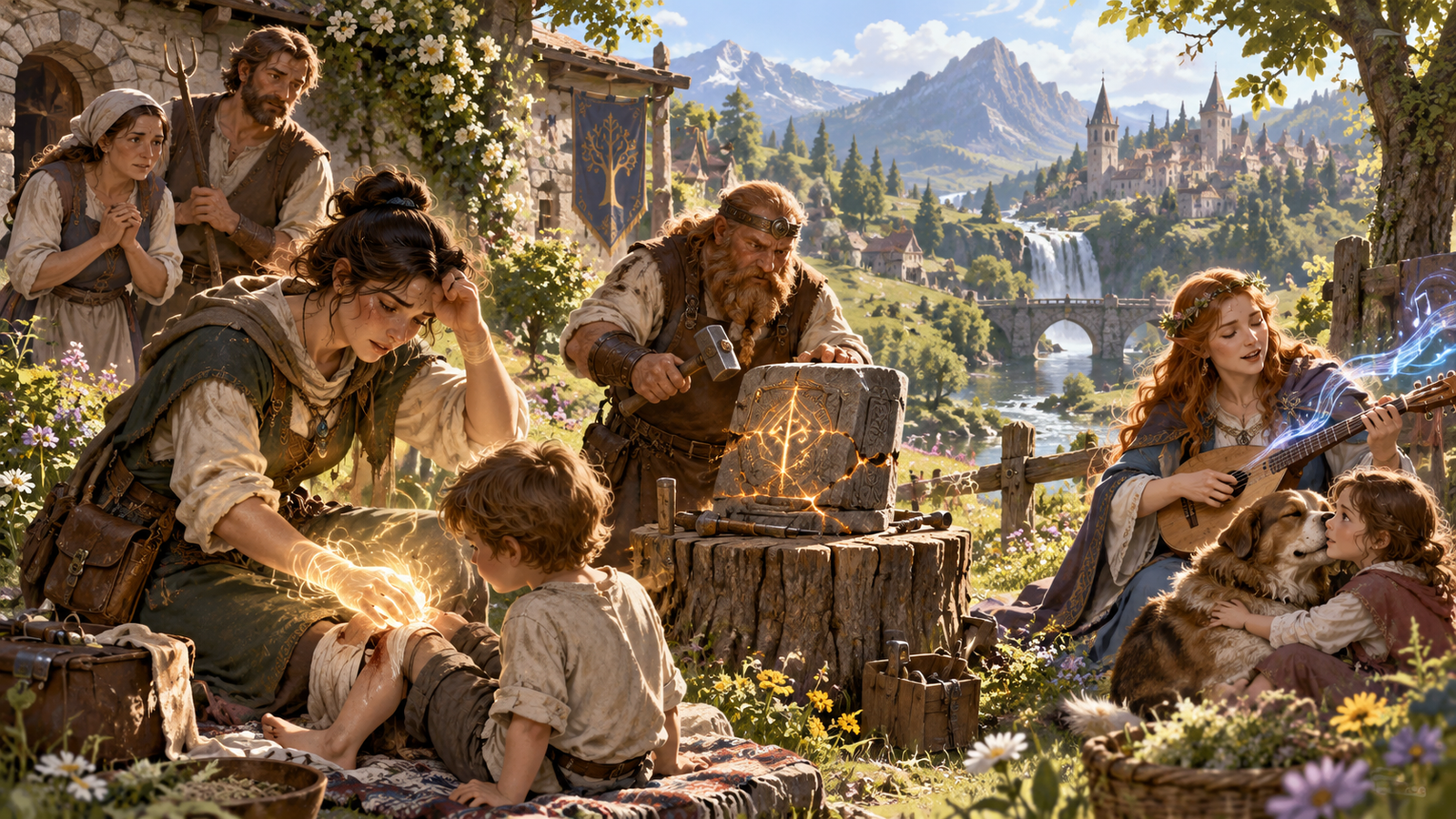
A singer might discover that her voice could calm a frightened room, then wake the next morning barely able to speak.
A healer could draw strength into a wounded body without realizing how much of that strength came from himself.
A Dwarf might carve a rune that held for years and another, nearly identical, that cracked the stone beneath it.
An Elf could spend hours studying a pattern in the Arcanosphere and realize afterward that far more time had passed than expected.
Those discoveries were not always disasters. Many became the foundation of later traditions. But the failures could be devastating.
Wards sometimes trapped the very people they were meant to protect. Rituals reached farther than intended. Magical experiments left marks on land, bodies, and bloodlines. In places where power had already gathered heavily, a mistake could do more than injure a caster.
People began to realize that power itself did not need to be cruel in order to be dangerous. A mistake could ruin a life. A badly understood working could destroy a home. Enough power, used badly enough, could wound an entire region.
The first lesson of the Age of Magic was not that magic should be feared. It was that magic had rules whether mortals understood them or not.
Next week, we will look at how the peoples of Einarth began turning those hard lessons into practices they could actually teach.
Leave a Reply